
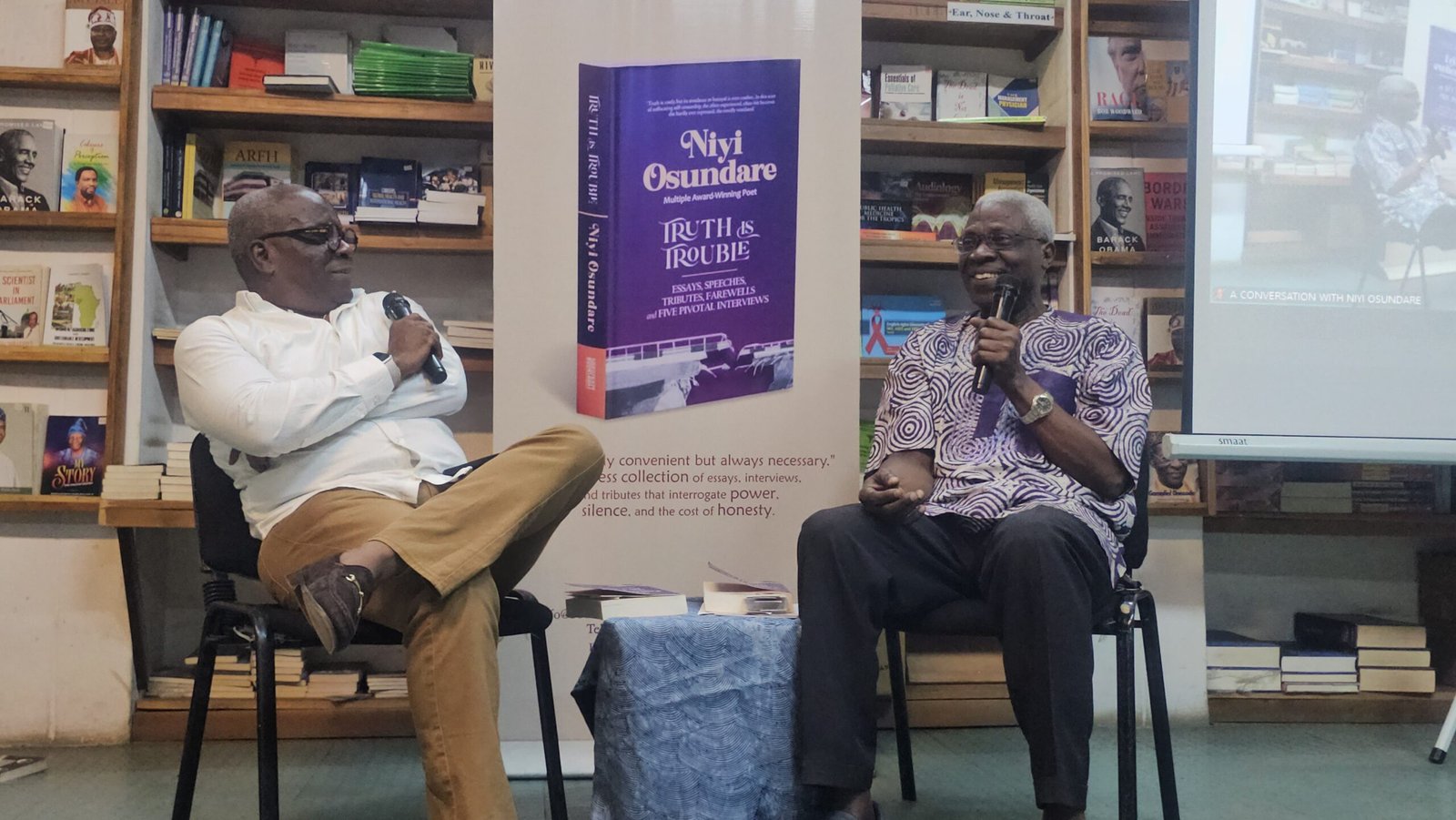
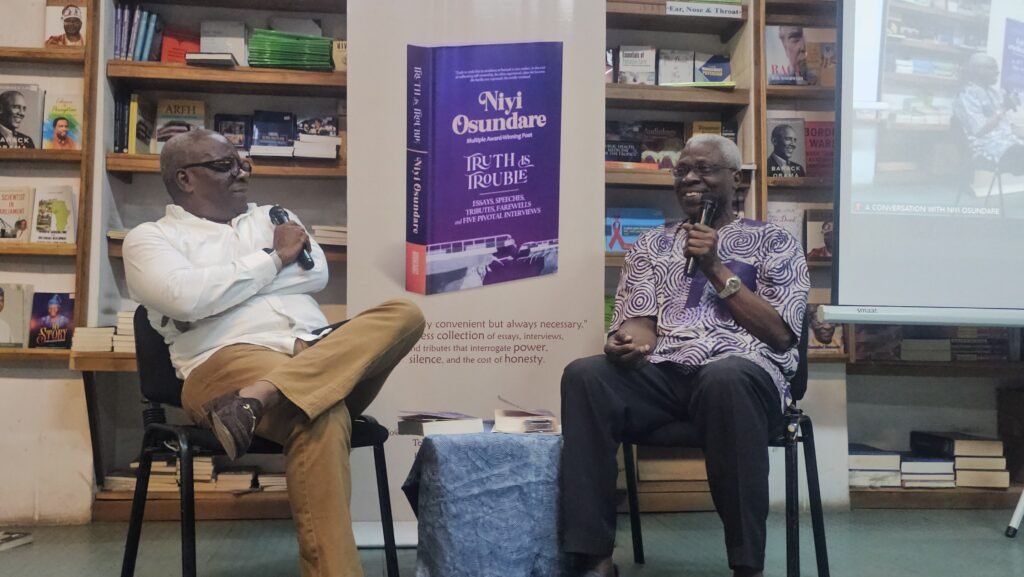
The Booksellers Limited and Bookcraft hosted a public conversation with award-winning poet and essayist Niyi Osundare at The Booksellers Ltd, 52 Magazine Road, Jericho, Ibadan, at 3:00 PM on Tuesday, 4th August 2026. The event, moderated by Gbenro Adegbola, drew readers, academics, and literary enthusiasts from across the city for an afternoon of conversation, audience engagement, and a book signing session.
Notable attendees included poets Tade Ipadeola and Prof. Remi Raji, musician Beautiful Nubia, Dr. Kolade Mosuro of The Booksellers Limited, Dr. Tunde Adegbola, Prof. Femi Osofisan, Prof. Abimbola Adelakun, Dr. Tony Marinho, Oluwaseun Akinola, Edmund Obilo, Ebika Anthony, Muyiwa Ige, and Mrs. Funsho Adegbola (nee Ige). Joining online were Prof. Tosin Gbogi, Bankole Olayebi, and David Emokpae.
The conversation centred on Osundare’s latest collection, Truth is Trouble: Essays, Speeches, Tributes, Farewells, and Five Pivotal Interviews, a wide-ranging volume that grapples with African literature, criticism, migration, intellectual independence, and the political and cultural realities shaping the continent.
Adegbola opened the discussion by asking Osundare about the Japa syndrome, noting that African leaders had tended to frame the conversation around remittances while overlooking what the country loses when its most talented people leave and do not return. Osundare responded with a patience and urgency that set the tone for the rest of the afternoon.
“The diaspora story is a very complex one,” he said. “I have been to virtually all the continents, and I have met Nigerians everywhere. I do not know anywhere I have been where I have met Nigerians who were completely happy about their being away from home.”
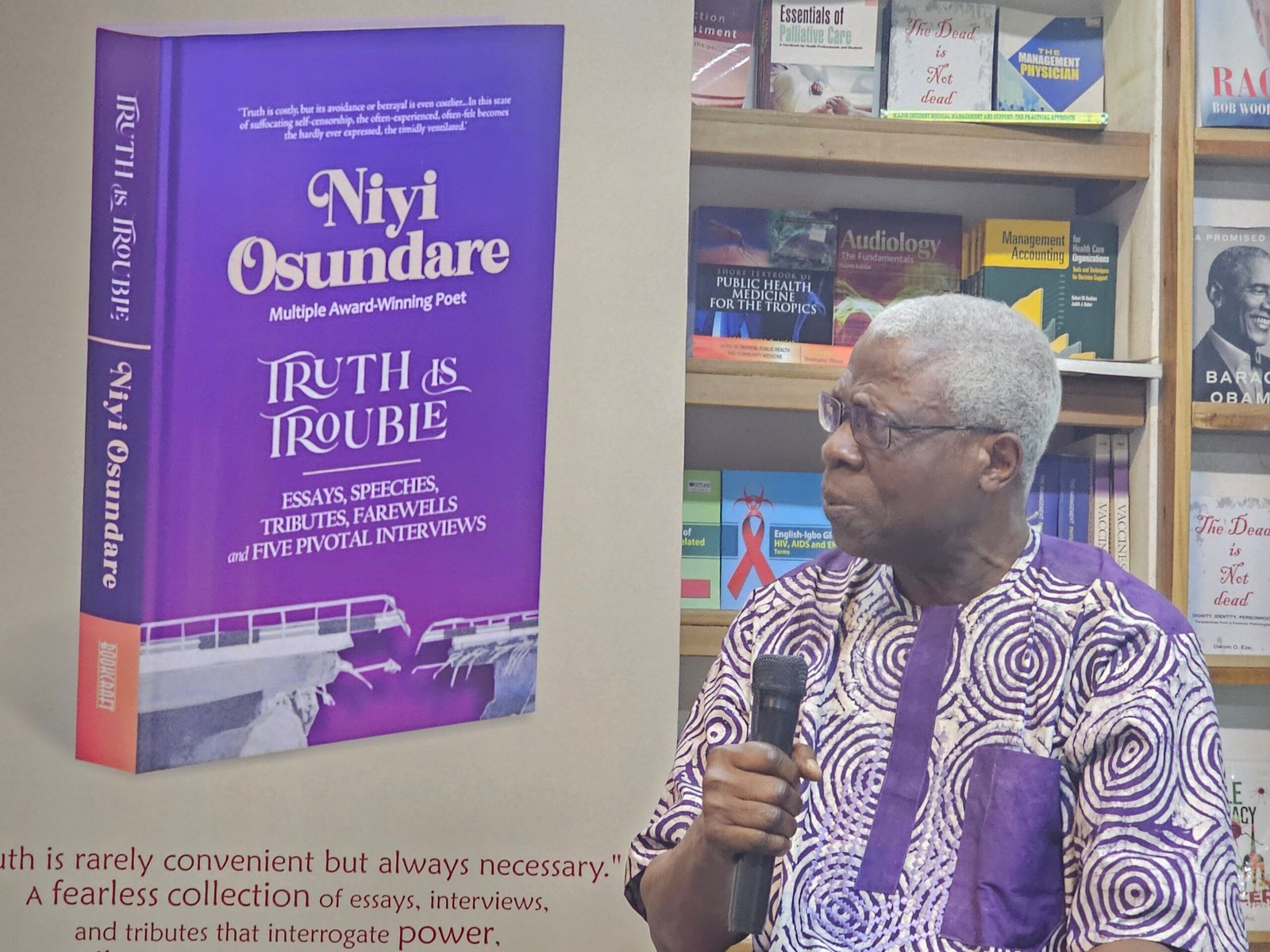
He drew a contrast between Nigeria and post-war Japan, where the government sent citizens abroad to study western technology with the specific expectation that they would return and build.
“The difference between those people and ours,” he said, “is that they went and they came back. Before you knew what was happening, you had Toyota, Honda, and so on. When our own people go, they do not come back.” He described the outflow of Nigerian talent as a form of blood money and outsourced slavery, and said underdevelopment and progress were never accidents.
On the subject of Ibadan, Osundare was equally expressive. He described the city as the publishing centre of the African continent and said his own connection to it went back to 1962, when he first arrived as a student and saw a television set for the first time at Government College, Ibadan. He expressed concern about the disappearance of the green spaces that once defined the city’s landscape.
“It is impossible to be in this city without being inspired,” he said. “But we have to remind people that we used not to be so reckless with what we have. Are we a country of Philistines?” He described Ibadan as “a city that belongs to us and a city that does not belong to itself.”
Asked about his life between Ibadan and New Orleans, where he has spent significant time over the past thirty years, Osundare said both cities were defined by music, food, and a creative energy that sustained him as a writer. He said New Orleans was a place where music found you whether you sought it or not, in the streets, after funerals, at every hour of the day.
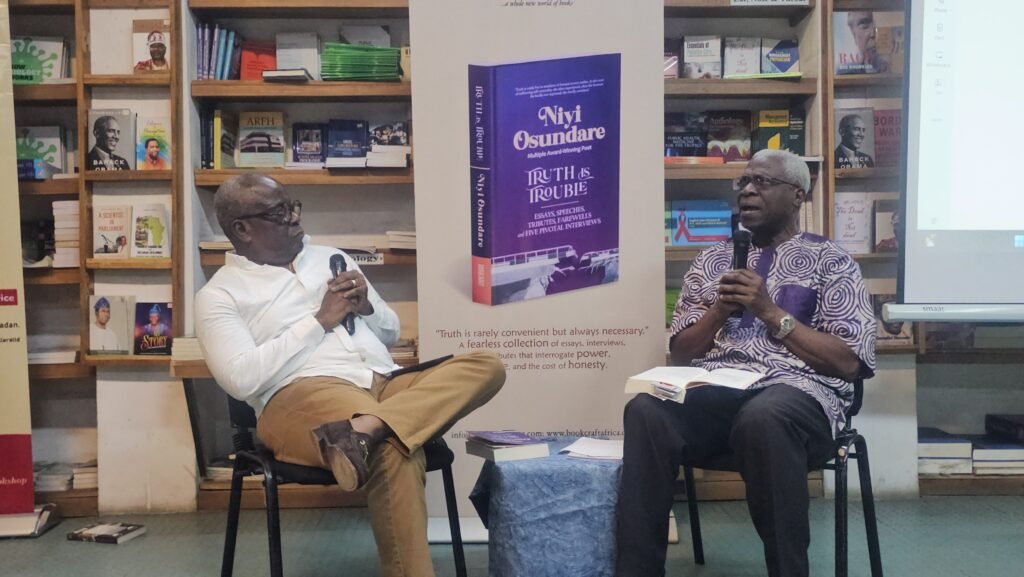
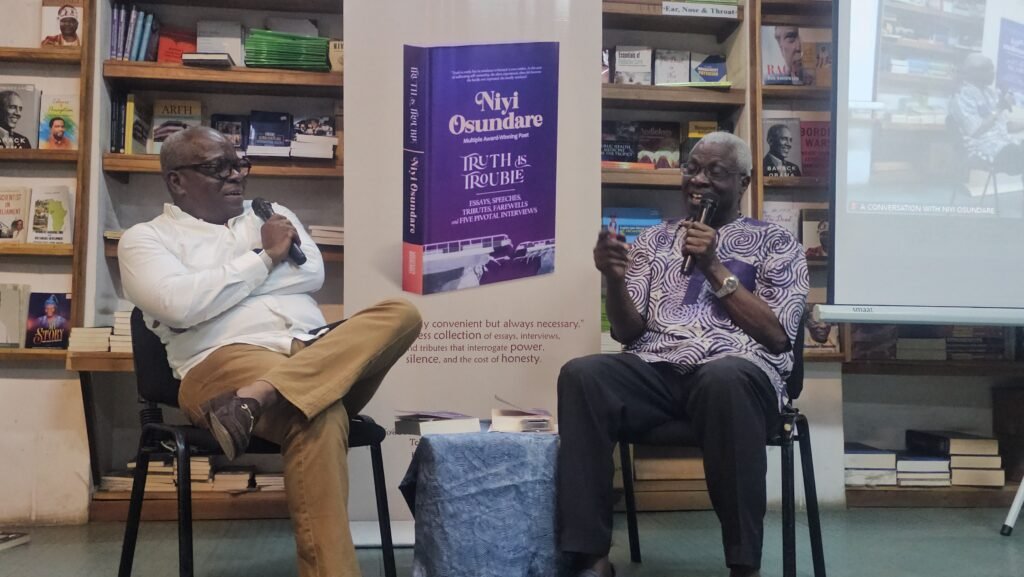
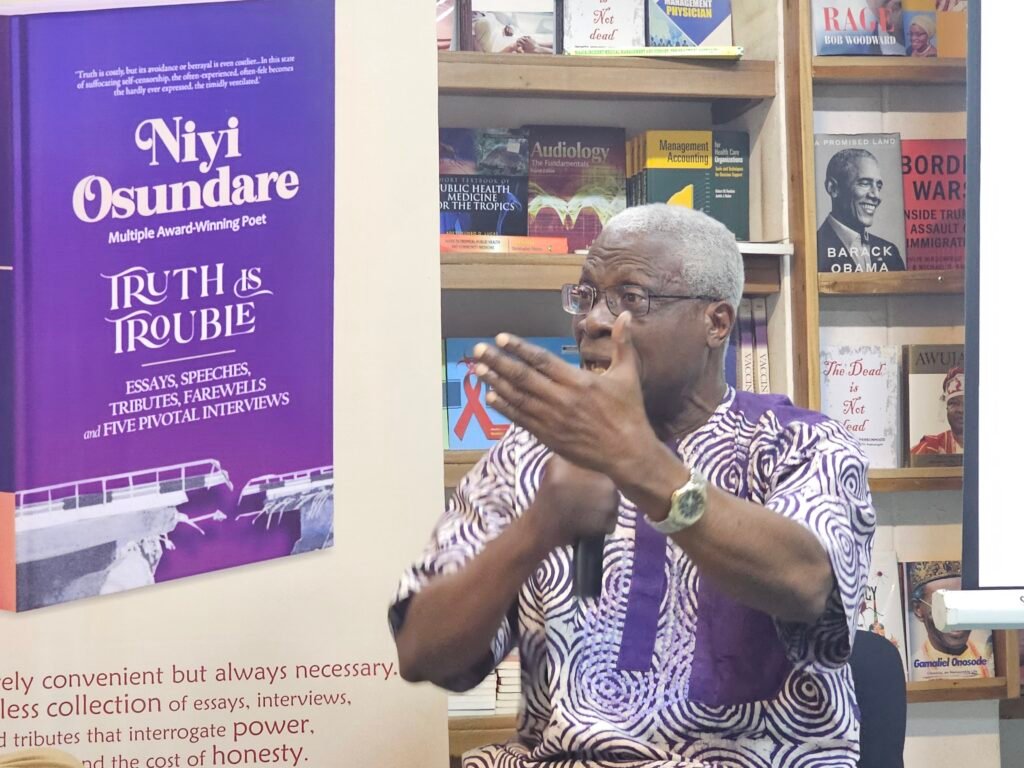
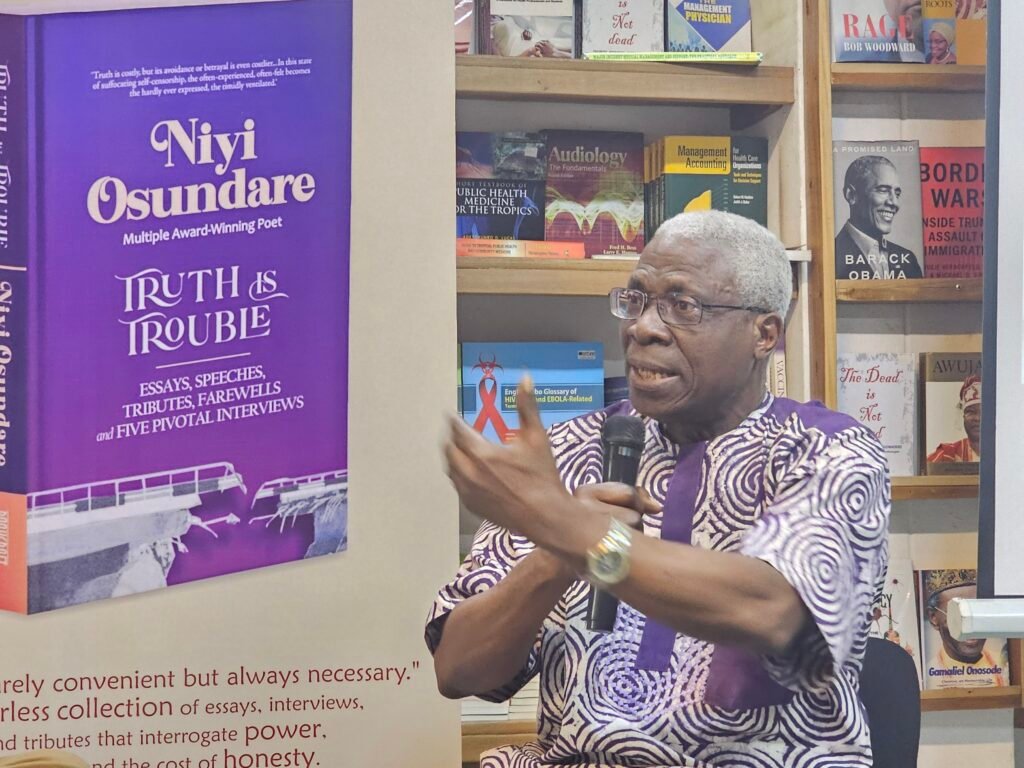
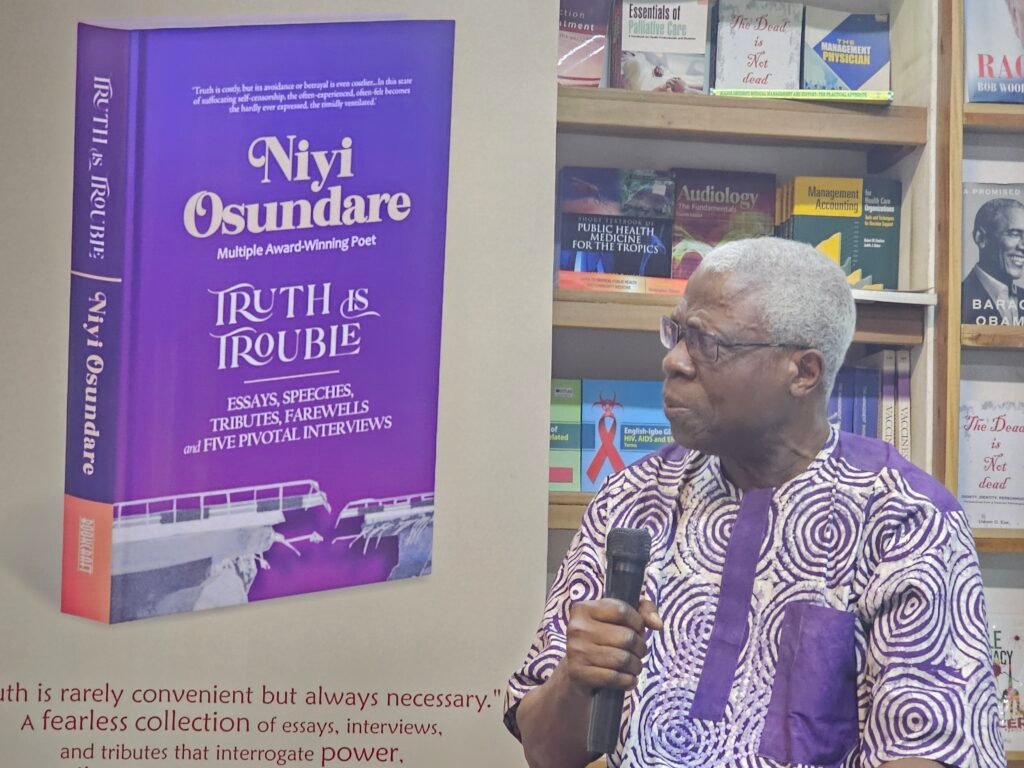
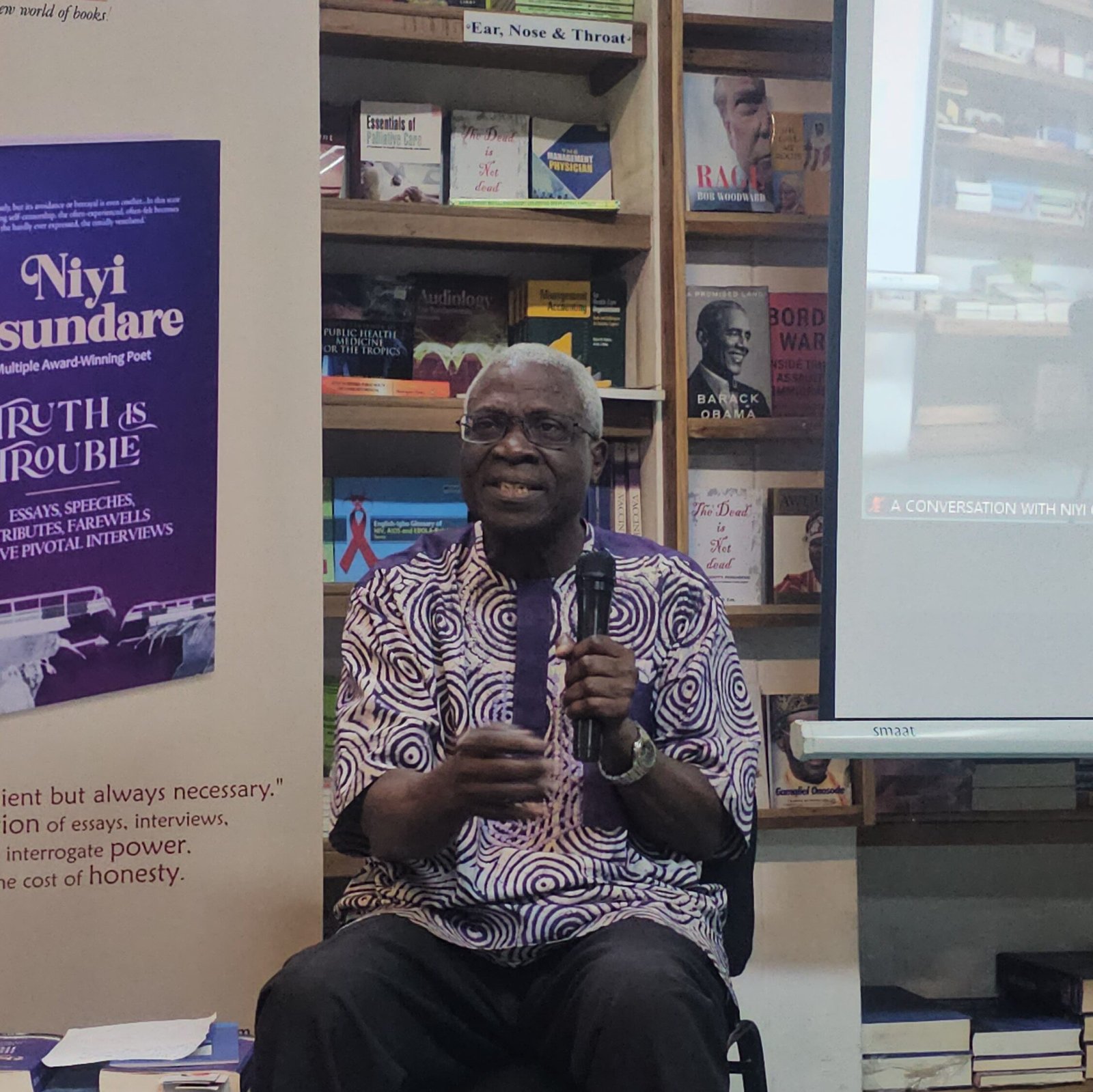
Adegbola then asked whether Osundare’s tributes to earlier writers in the book risked reinforcing a literary pantheon rather than encouraging more horizontal relationships among writers. Osundare argued that every writer needs what he called a group of conspirators, and that the generation of Soyinka, Achebe, and Okigbo produced what it did because they had each other and because the country, difficult as it was, made it impossible for them not to create. He spoke about the creative writing workshop he ran at the University of Ibadan in the 1970s, 1980s, and 1990s, where he and his students would write together in the evenings and critique each other’s work.
“Every writer needs a community,” he said. “Every writer needs a group of conspirators. Without an audience, art perishes.”
On the state of Nigerian universities, Osundare was direct. He described the supervisor-student relationship as broken by tyranny, said the ambience of the classroom had deteriorated sharply, and called on academics to ask themselves whether they were teaching students the way they themselves had been taught.
“We must not run our universities the way our politicians are running Nigeria,” he said.
When the conversation opened to the audience, four questions were taken from the floor, from Prof. Olabode Lucas, Tope Eniobanke Adegoke, Prof. Tunde Adeniran, and Tunde Fagbenle, along with one question from online participant Deji Toye. The questions ranged from the success stories of Nigerians in the diaspora, to the inequality embedded in cultural exchange programmes run by Western institutions in Africa, to what could practically be done to reverse the decline of Nigerian public life. On poverty and democracy, Osundare was unequivocal.
“Poverty and democracy cannot live in the same house,” he said. “Politicians are still buying votes because there are people willing to sell them. The fate of Nigeria is in our hands. Nobody is going to come here and develop this country for us.”
Tributes followed the audience session. Prof. Femi Osofisan praised the book as among the most important to come from Osundare’s desk, particularly for its sustained attention to the writers who came before him. “In all my reading about our writers,” Osofisan said, “yourself and a very few others have written the most about those who came before you. That is important.”
Closing remarks were delivered by Dr. Kolade Mosuro of The Booksellers Limited, who reminded the audience that everything discussed that afternoon had its starting point in the book itself. He called on those present to purchase copies and support the Nigerian publishing industry, noting that without readers willing to buy, there would be no reason for second books or third ones.
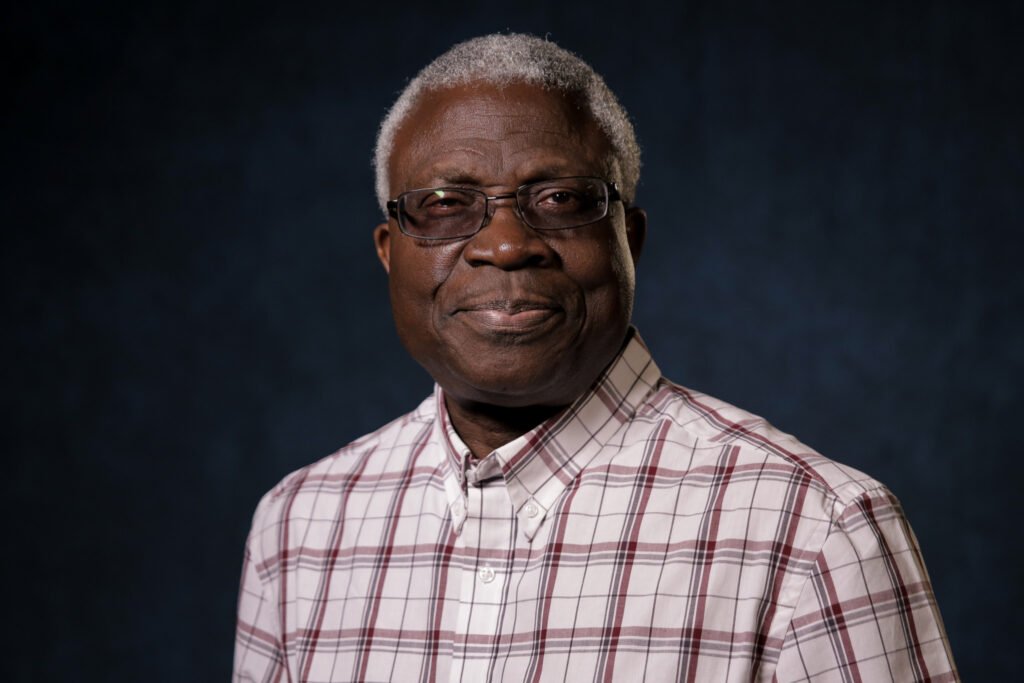
Niyi Osundare is one of Africa’s most decorated writers. He is a professor of English, a poet, essayist, and playwright whose work has been published across four decades. He has held academic positions in Nigeria and the United States, and returns to Ibadan regularly. Gbenro Adegbola moderated the conversation.
Laipo Magazine is the official publication of the Ibadan Book and Arts Festival, documenting literary events, book culture, and creative conversations across Nigeria.