
“No One Can Tell African Stories as Authentically as Africans Themselves”
— Tade Ipadeola at IBAFEST 2026
The second edition of the Ibadan Book and Arts Festival draws writers, students, and cultural practitioners across four days of literary and cultural programming
IBADAN, 31 OCTOBER 2026
SANKOFA INITIATIVE FOR CULTURE AND DEVELOPMENT
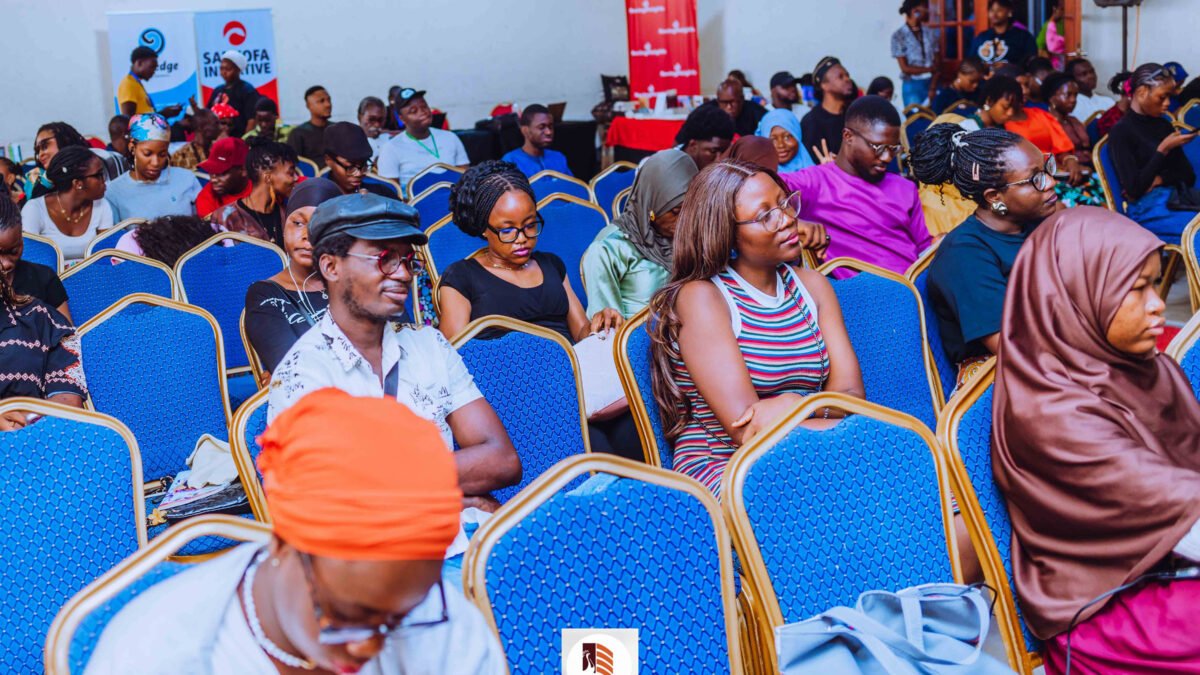
The second edition of the Ibadan Book and Arts Festival (IBAFEST) held its final day on Saturday at the Olusegun Aganga Hall, International Conference Centre, University of Ibadan, bringing to an end four days of literary workshops, book conversations, panel sessions, and performances that drew writers, students, scholars, and cultural practitioners from across Nigeria. Organised by the Sankofa Initiative for Culture and Development (SICD), the festival ran from Sunday, 25 October to Saturday, 31 October 2026, under the theme The Stories We Long to Tell, which raised a question that ran through the different sessions: who gets to tell African stories, in what language, and for which readers?
The festival began on Sunday, 25 October, at RovingHeights Bookstore in Old Bodija, Ibadan, where poets Su’eddie Vershima Agema and Professor Hyginus Ekwuazi discussed their recent poetry collections, I Stumble Inside Me Looking for Sunlight and Fragments Salvaged from the Deluge, respectively. Asked about artificial intelligence, Professor Ekwuazi said, “AI can take you far, but no further.”
The programme continued on Thursday, 29 October, with three creative workshops and two book chats held virtually. Romeo Oriogun, whose poetry session drew the highest attendance of any virtual event, challenged participants to build a poetic language based on their own experience rather than in the conventions of foreign literary journals. “The big things you want to write,” he told the room, “are contained in the little lives you are going to write about.” Also facilitating a workshop, Wana Udobang led the performance poetry session, “Embodying the Stage”, where she urged participants to perform in their natural voices rather than alter their accents. She explained that the influence of their indigenous languages and dialects could enrich their performances. “If you have an Igbo accent, a Yoruba accent and Hausa accent, it actually adds. It’s actually an asset,” she said. She noted that Nigerians often move between languages and accents, and that this multilingual experience could inform how they express themselves on stage. Following Wana Udobang’s session, Stephen Okonkwo led a screenwriting workshop, distinguishing between a plot premise and a thematic premise. He reminded participants that “a story can make an argument about how to live.” On artificial intelligence, he noted that while it could generate a script outline, it could not humanise a story or develop its argument logically.
Festival Proceedings
Friday’s Book Conversations
On Friday, 30 October, the virtual programme continued with seven book chat sessions. These included a special book chat with renowned musician and poet Beautiful Nubia, conversations on Nigerian digital literature and diaspora writing, and a panel discussion on Nigerian hip-hop and the politics of expression.
Other authors featured in the book chat sessions included Taofeek Ayeyemi, author of Dust and Rust; Tukur Loba Ridwan, author of Everywhere It Rains; Paul Omeje, author of Apata Boys; Bolaji Olatunde, author of Life Less Abundant; Eriata Oribhabor, author of Crossroads & the Rubicon; Ernest Jésùyẹmí, author of A Pocket of Genesis; Rosemary Okafor, author of Field of Grace; Habi O., author of Ifemade: Love Will Come; Ndubuisi Martins, author of Promenades; Jide Badmus, author of Dawn Is an Open Wound; Pelu Awofeso, author of 9 Degrees North: Backpacking Stories Across Nigeria; Beautiful Nubia, author of Citadel Blues; Tosin Gbogi, author of Nigerian Hip-Hop: Race, Knowledge, and the Poetics of Resistance; Godwin Tom, author of The Journey of a Learner; and Dotun Ayobade, author of Queens of Afrobeat: Women, Play, and Fela Kuti’s Music Rebellion.
The sessions were also moderated by writers and literary practitioners, including Joel Oyeleke, author of God Is a Poet; Tọ́pẹ́-ẸniỌbańkẹ́ Adégòkè, author of Two Interlocked Triangles; Alexander Izang, author of Letters to 42 Writers and In a Man’s Body; ’Joba Ojelabi, author of The Ones Before You; and Afrika-Oko Owi Ocho, author of Now I Sing God into Stones. Other moderators included Kayode Sanni, Nusiroh Shuaib and Kawthar Omisore.
Festival Proceedings
The Saturday Programme
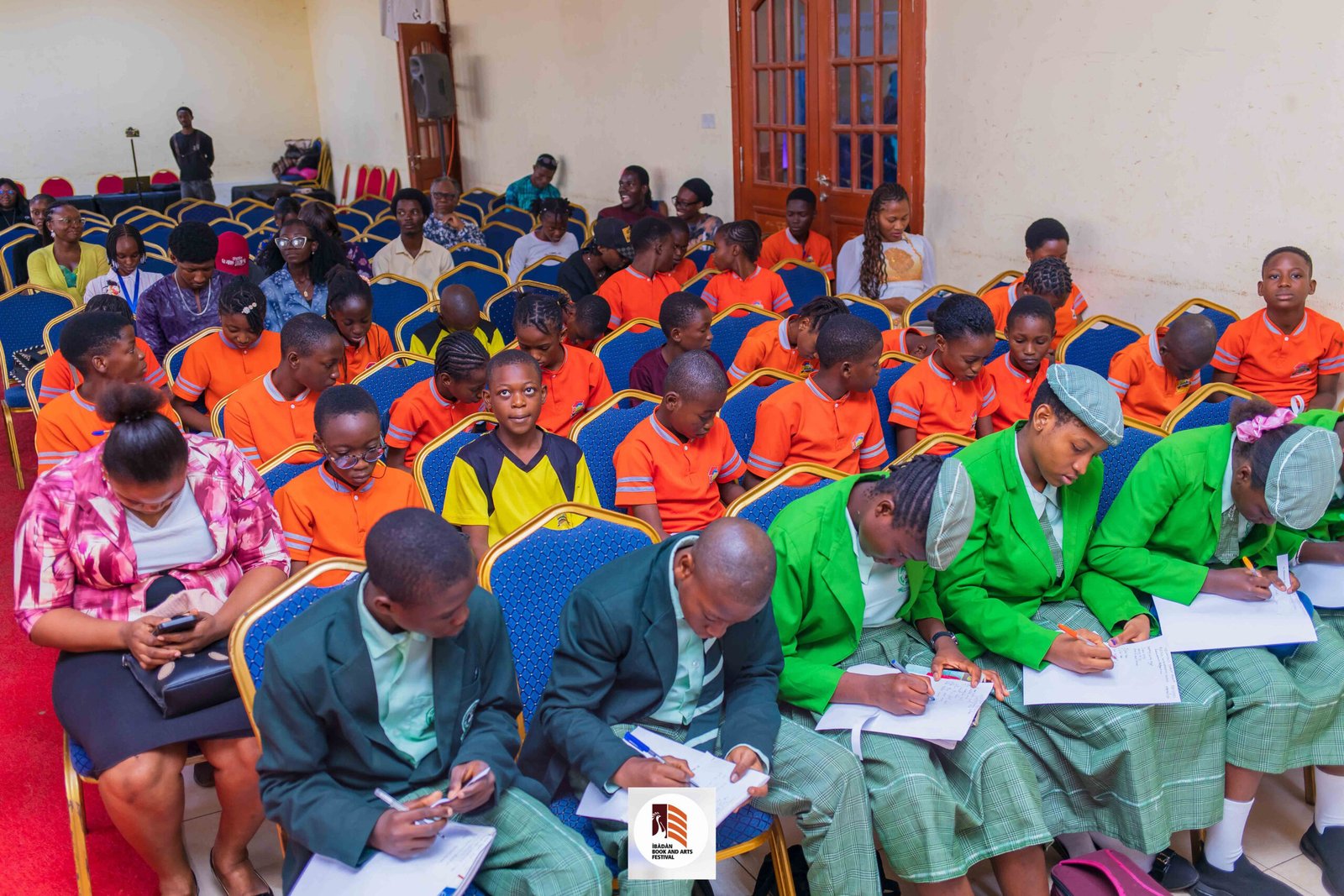
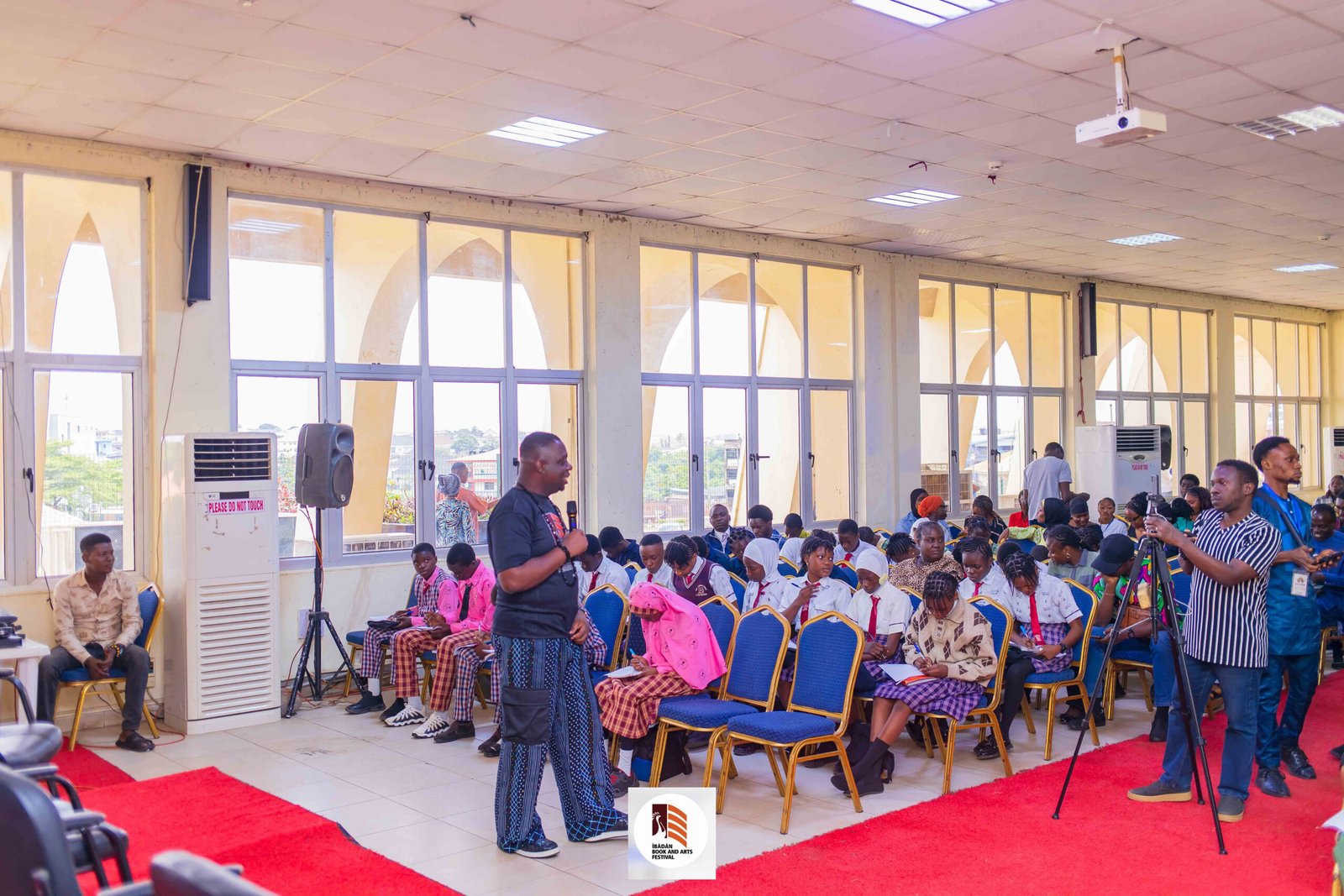
The festival’s physical programme took place on Saturday, 31 October, at the International Conference Centre, University of Ibadan. The day began with a school session that brought students from seven secondary schools into the hall. Poet and educator Godson Osarenren led a creative writing workshop in which students wrote original poems against a prompt. A panel session with students followed, with authors Tobiloba Afolayan, Ayo Oyeku, and Christy Butler answering questions from student representatives. Ayo Oyeku, whose works have been longlisted for the Nigeria Prize for Literature three times, answered a student who asked whether science students could also be writers: “If you can do the two, you can go further and farther than you can imagine.”
Featured Address
The Keynote Address
The keynote address followed, with Tade Ipadeola, poet, lawyer, translator, and winner of the 2013 Nigeria Prize for Literature, speaking before a full hall. He cited data from the International Publishers Association showing that Africa accounts for approximately six to seven percent of published writing globally. He attributed this gap to low literacy rates, weak publishing infrastructure, inadequate library facilities, and what he described as authorial extraversion, the tendency of African writers to write primarily for foreign audiences.
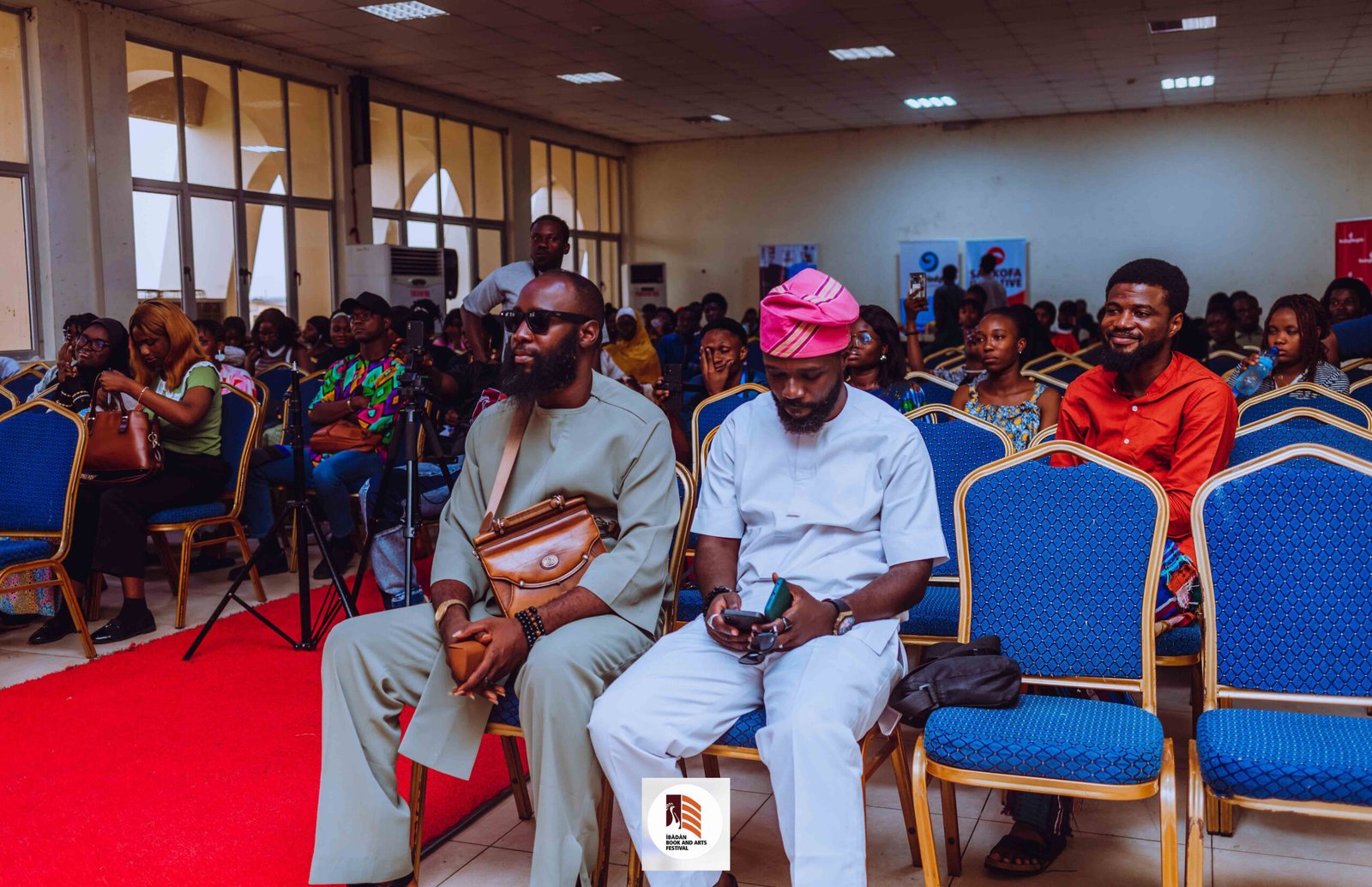
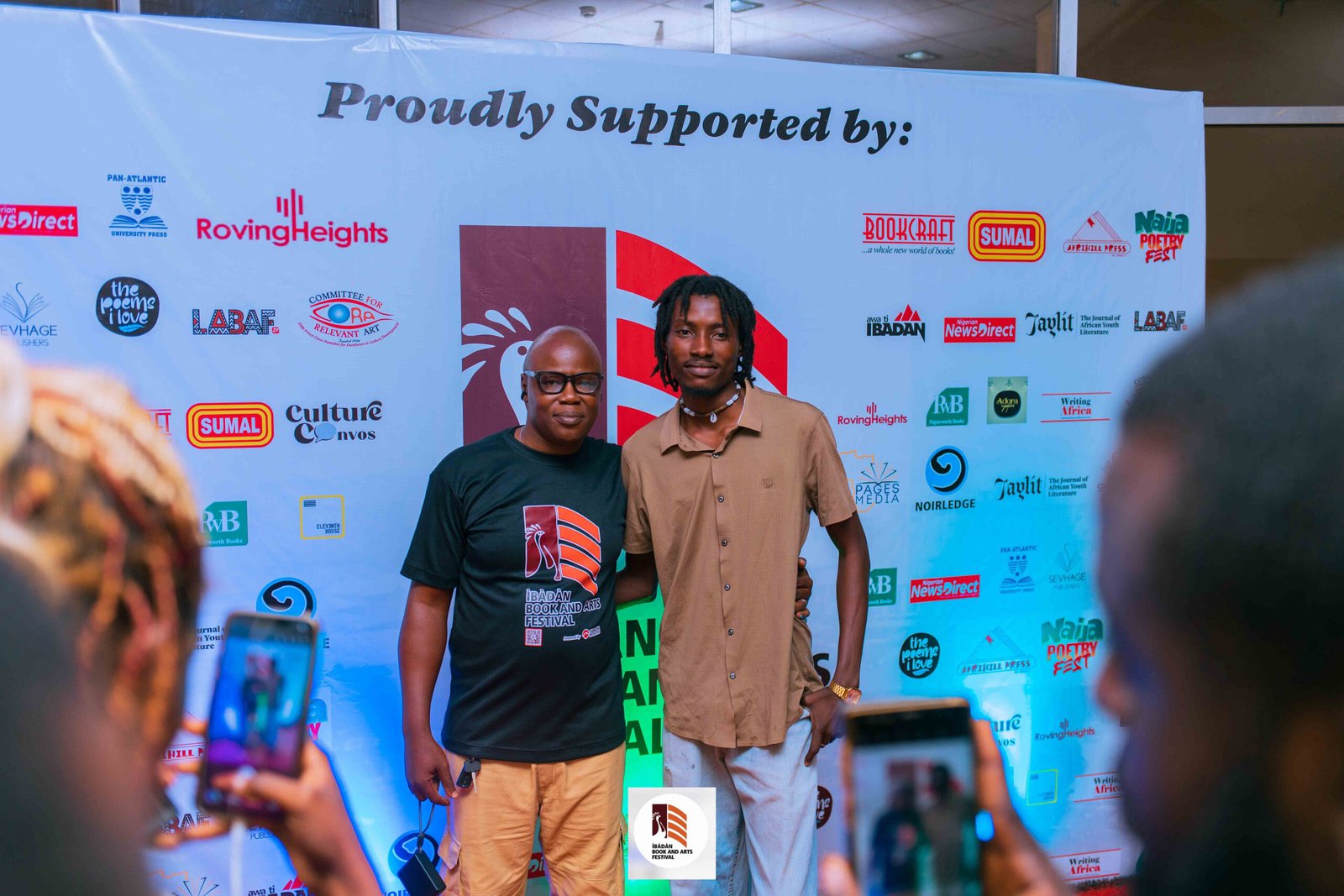
To explain this further, he compared Africa’s publishing situation with India’s Sahitya Akademi, where professors dedicate their careers to translating literature across the country’s major languages. This has helped produce writers with readerships running into hundreds of millions who remain largely unknown in the English-speaking world. According to Ipadeola, the gap is not a failure of imagination. It is a failure of infrastructure and cultural confidence.
“No one can tell African stories as authentically as Africans themselves. But we must ask whether we are producing enough literature to tell those stories.
Tade Ipadeola | Keynote Address | IBAFEST 2026
“We are the bridges between who our ancestors were and who our progeny will be.”
Tade Ipadeola | Keynote Address | IBAFEST 2026
In addition to discussing African publishing, Ipadeola cautioned younger writers against mistaking digital visibility for literary achievement and outsourcing the imaginative act to artificial intelligence, which he compared to the use of performance-enhancing drugs in sport. He also invoked the words of Amílcar Cabral, urging writers to tell no lies and claim no easy victories. He ended his address with the Yoruba expression “Òkú níbòn n rò”, drawing a standing ovation from the audience.
Discussions and Exchange
Afternoon Conversations
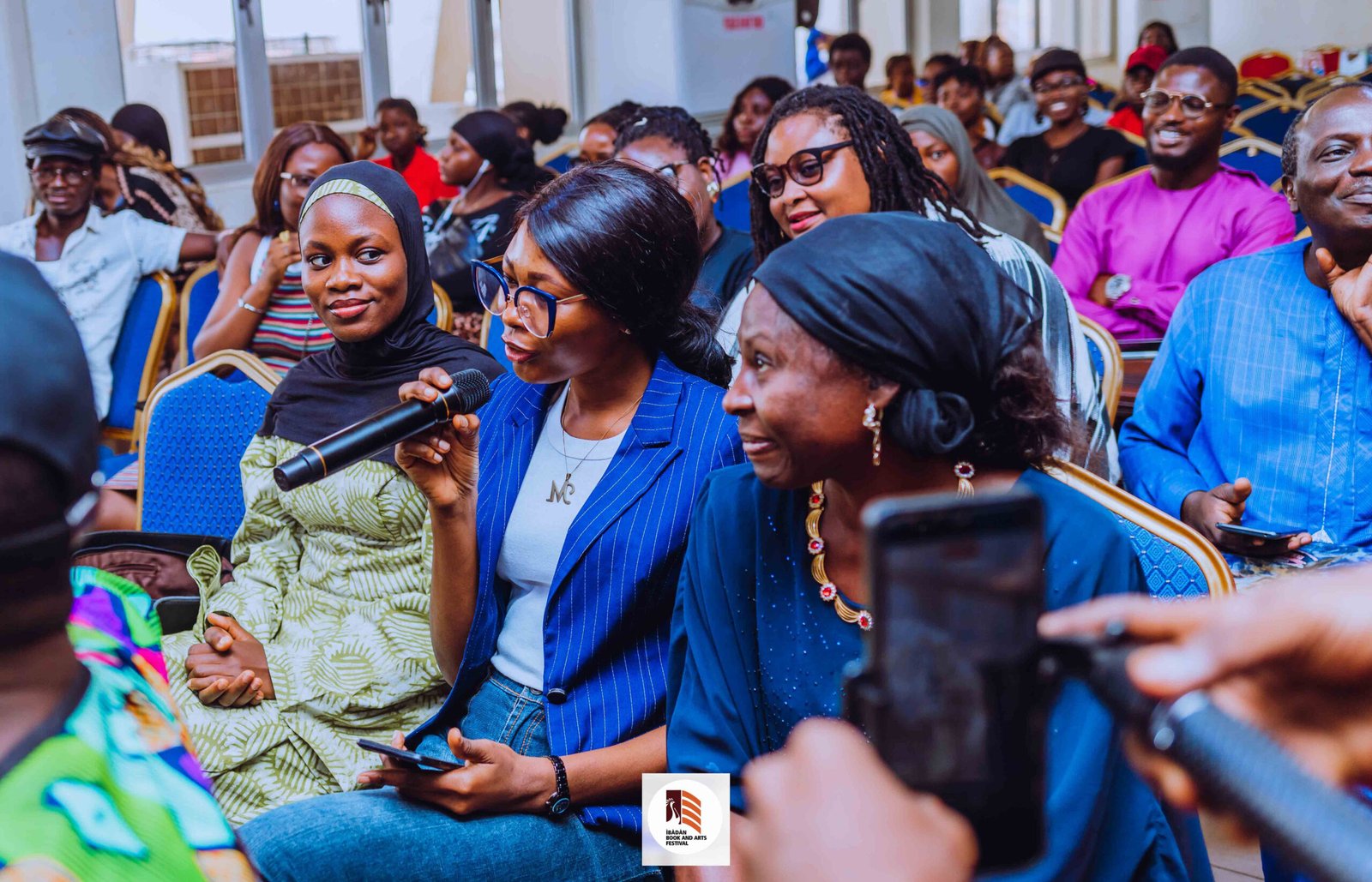
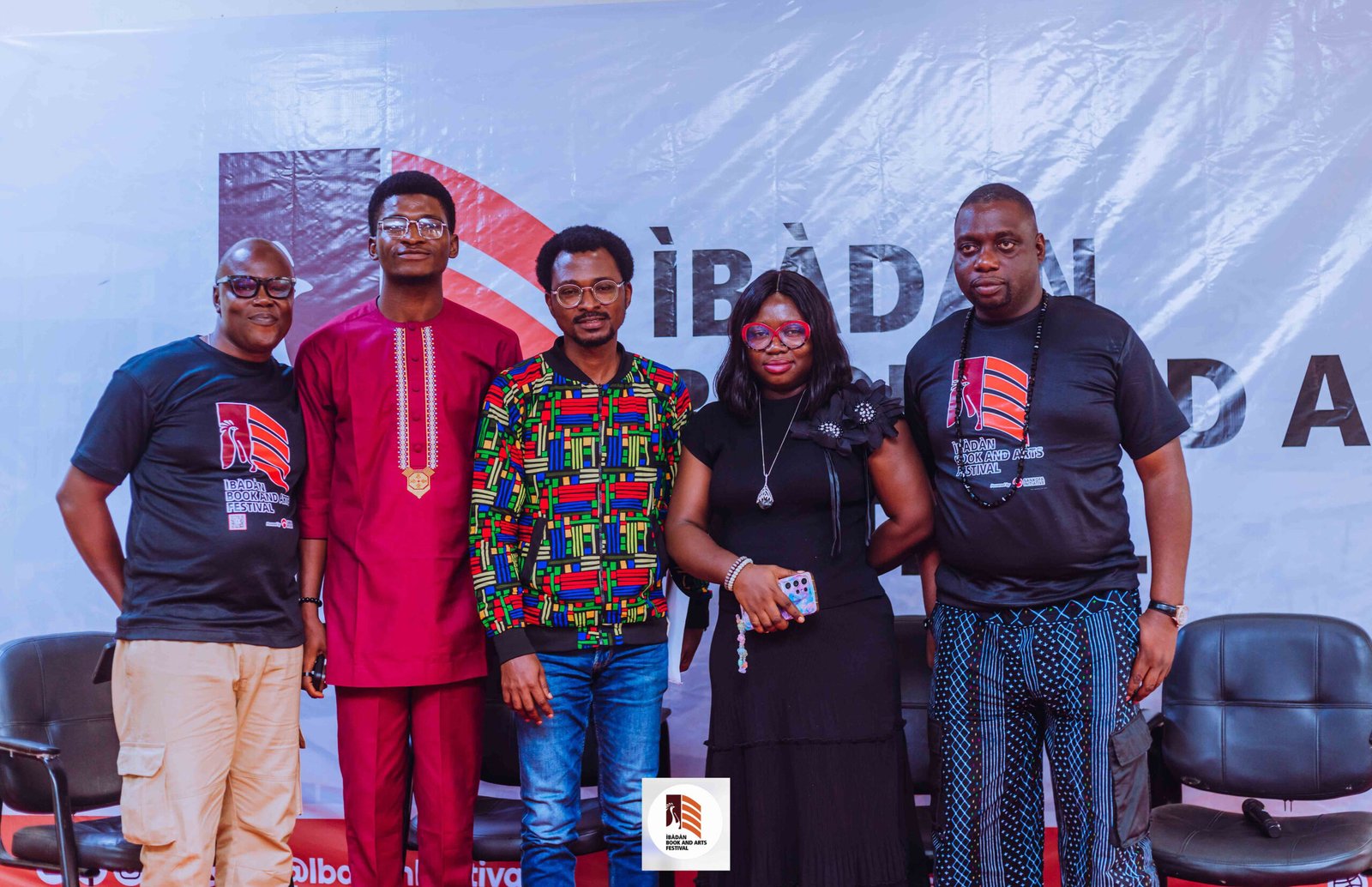
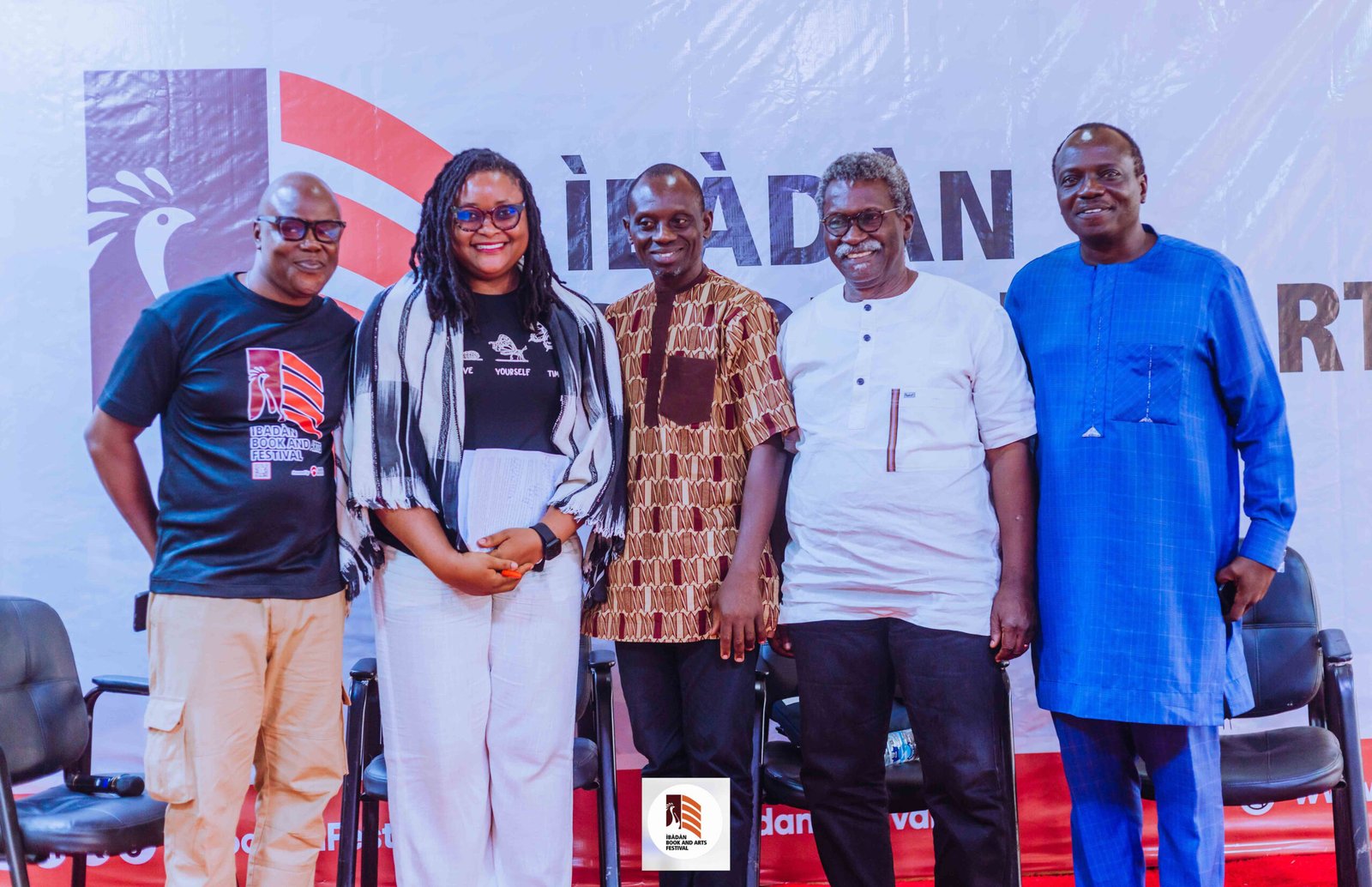
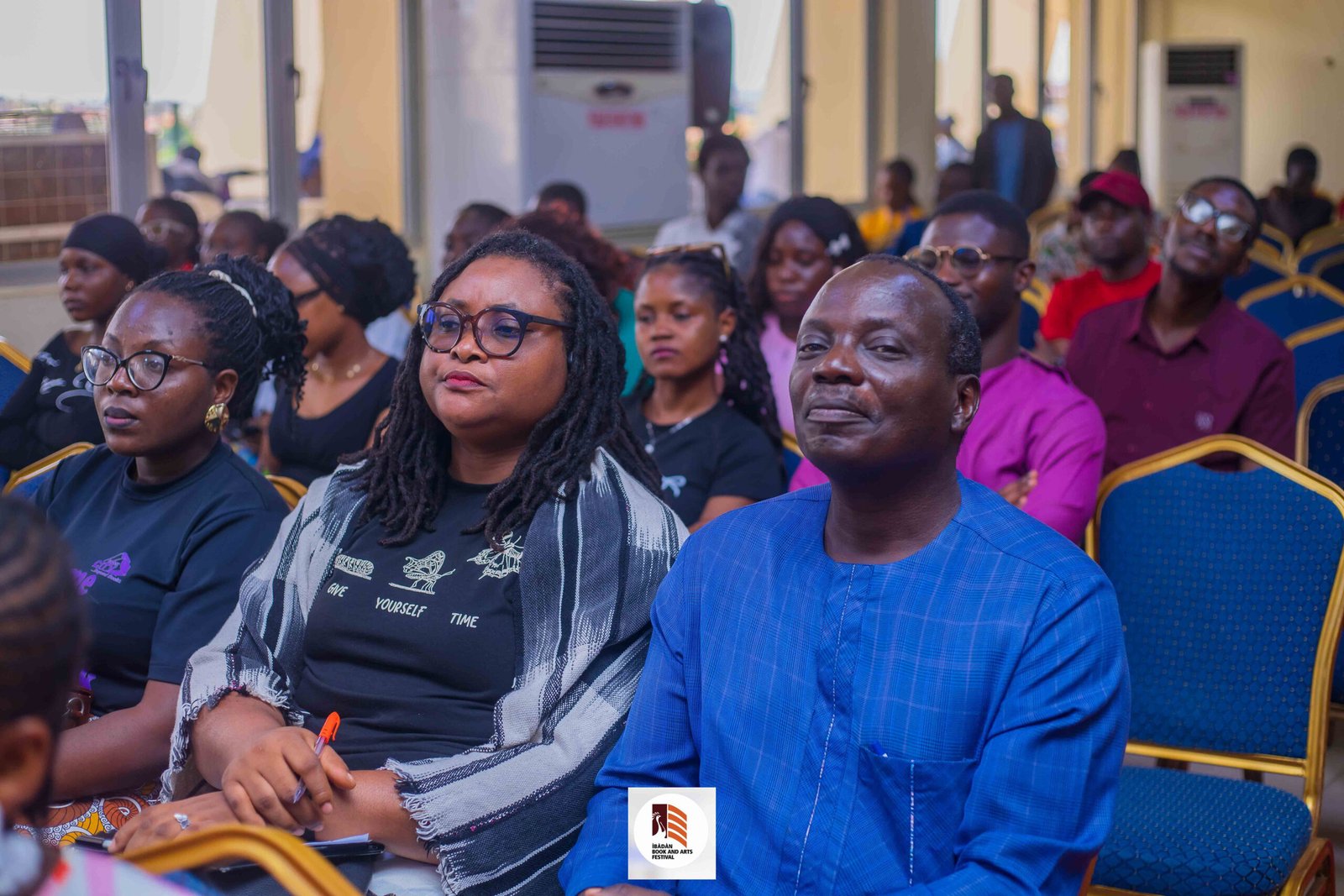
Following the keynote address, the afternoon panel sessions addressed the festival’s theme from different directions. The keynote conversation, moderated by broadcast journalist Michael Olatunbosun, featured Dr Olanike Benette Onimisi, Tade Ipadeola and Dr Tunde Adegbola. Onimisi argued that young people cannot tell African stories effectively if they are unfamiliar with their own history and indigenous literature. Adegbola, whose research focuses on human language technology and adapting information and communication technologies for use in African languages, made the case that indigenous knowledge and modern technological innovation are not in opposition. “History is a story,” he said, “until it becomes our story.” The afternoon also featured a panel on digital content creation, moderated by Segun Aribisala, with Afouda Samuel and ’Joba Ojelabi discussing how digital platforms are changing the way Africans tell their stories. Samuel noted that while the style of narration has changed, the stories themselves have not. He also stressed the importance of understanding the purpose of a piece of content. Ojelabi spoke about the growing shift from text to video and cautioned young creatives against allowing AI to take over their creative process. The panel also addressed originality in AI-assisted writing and the challenges of bringing literary discussions to radio.
Looking Ahead
New Initiatives Announced
Also during the festival, Festival Director Servio Gbadamosi announced three upcoming initiatives in his welcome address. These were the inaugural print edition of Laipo Magazine, the official literary and cultural magazine of IBAFEST, expected in December 2026; the IBAFEST Young Writers’ Prize; and the IBAFEST Secondary Schools’ Storytelling Challenge.
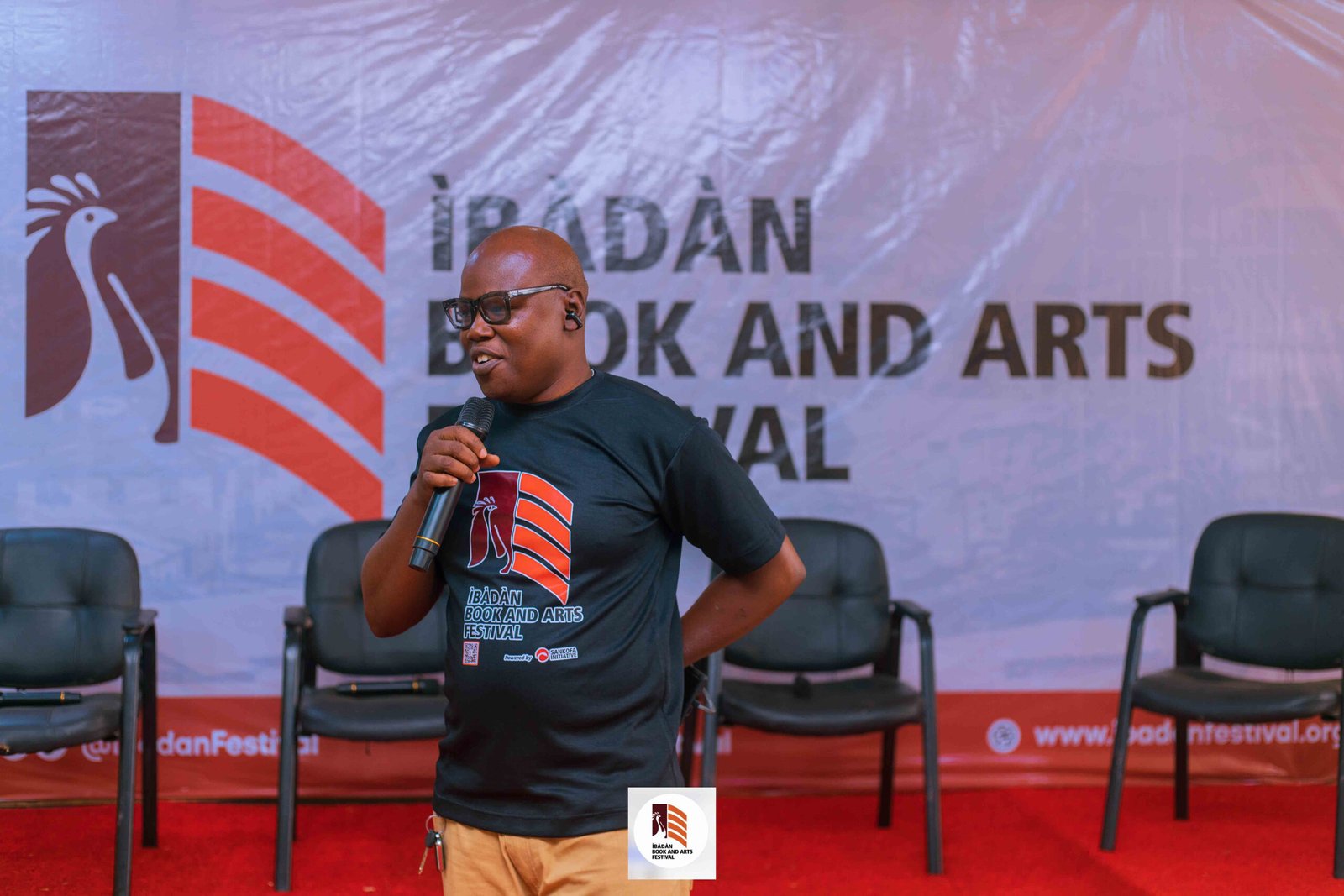
Speaking on the broader purpose of the festival, Gbadamosi said:
“These initiatives matter because the long-term value of a festival is measured not only by who attends, but also by what participants are able to do after they leave.”
Servio Gbadamosi | Festival Director, IBAFEST 2026
Final Moments
Closing Performances
Finally, the closing performances, anchored by Savvy Bolu, ran for over an hour and featured spoken word, poetry, and open-mic performances from multiple artists. The festival ended at 6:10 p.m., with an estimated attendance of over 900 people across all events.
The Festival
About IBAFEST
The Ibadan Book and Arts Festival (IBAFEST) is an annual literary and cultural festival rooted in Ibadan, Nigeria. Organised by the Sankofa Initiative for Culture and Development, the festival brings together writers, artists, scholars, students, cultural practitioners and audiences through books, literature, performance, arts, workshops and conversations.
IBAFEST is committed to creating meaningful opportunities for cultural exchange, supporting emerging voices and connecting Ibadan’s rich literary and cultural heritage with contemporary conversations about Nigeria, Africa and the wider world.